
Washboard! This object is a washboard that is constructed out of corrugated metal and a wooden frame. Before washing machines, laundry was done by hand. Using a laundry tub filled with some water, soap and the washboard, clothing was rubbed against the metal part of the washboard to make the soap lather the garment. This washboard was originally owned by Charles Cooper of Kendal.
Guess the Object
South Courtice Arena
Explore CLMA's new mini-exhibit at the South Courtice Arena about our changing technology and tools!
Use your detective skills to look closely at the objects, and consider:
- What materials are they made out of?
- How could you use them? How are they powered?
- Do they look the same or different today?
Click or tap the button beside each photo to see if you've guessed correctly!
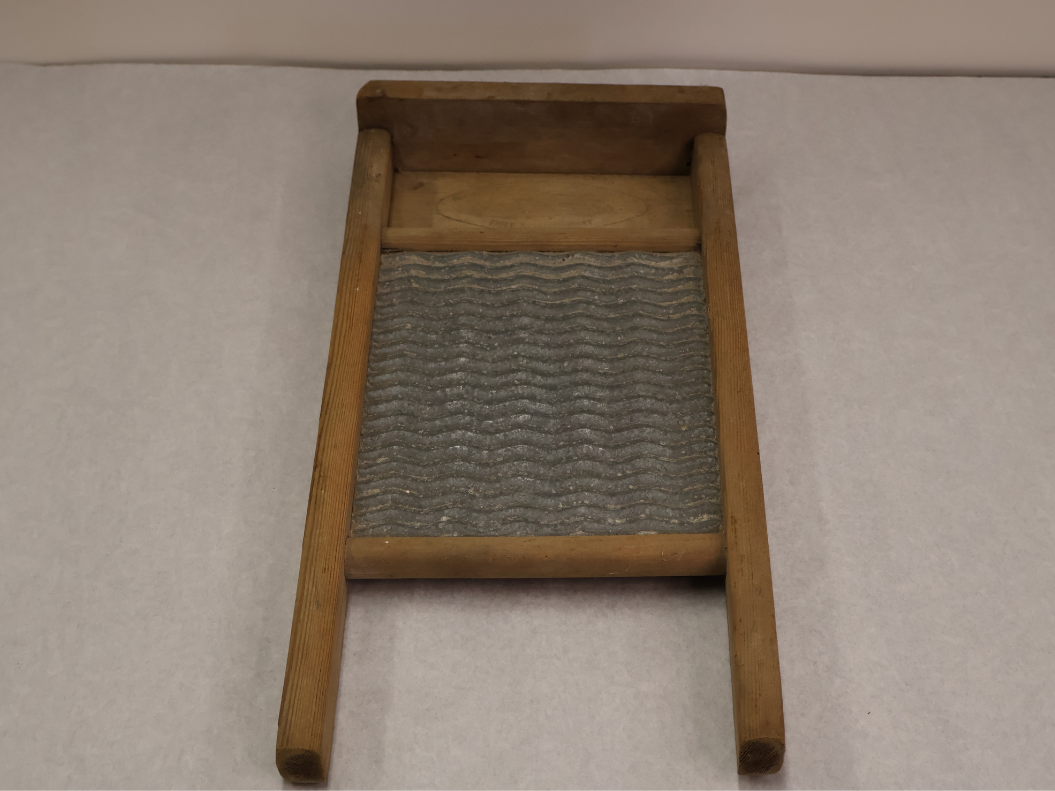
Hint: use with soap
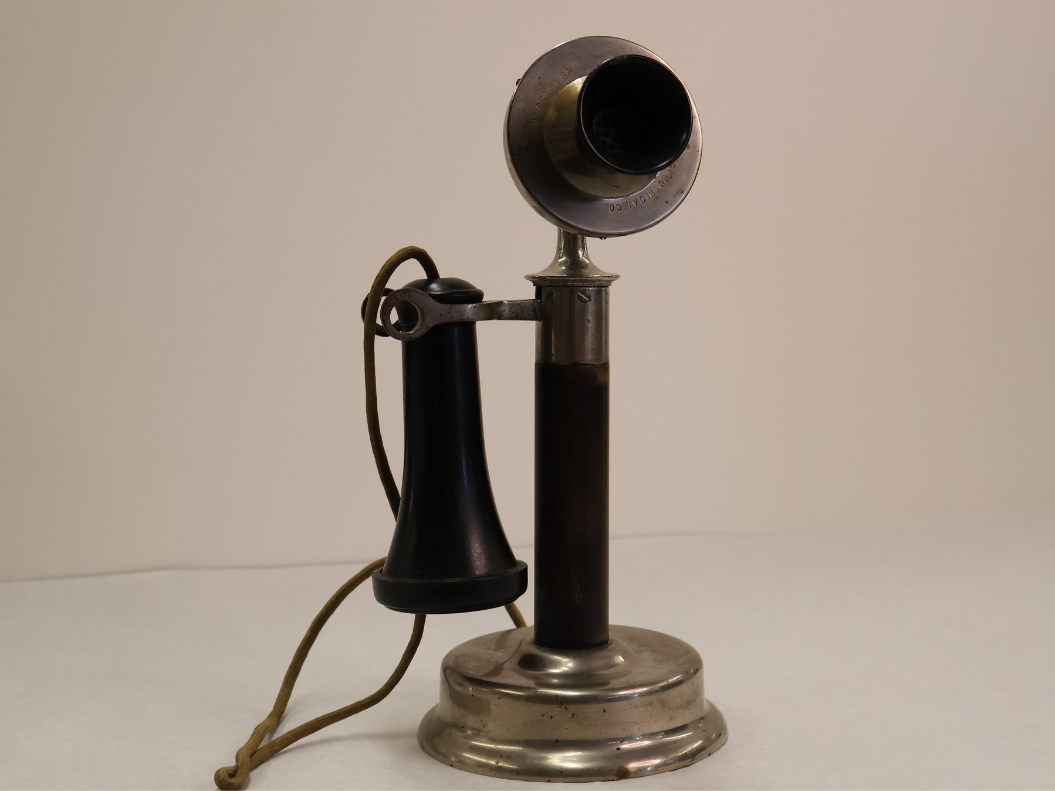
Hint: makes a sound
Telephone! This is an early version of a telephone from the 1910s. To use it, you would listen with the earpiece that hangs next to the mouthpiece, into which you would talk like a microphone. This telephone was made by Jaynes Electrical Co., Buffalo, New York. Locally in Bowmanville, The Bell Telephone Company began operating in 1880 with Thomas Bingham as the first manager. The first five subscribers were: John McClellan, McClellan and Co., Brittain Brothers, The Dominion Telegraph Co., and the Station Hotel. By 1883 there were 46 subscribers and by 1899 it had jumped to 80 people using telephones locally.
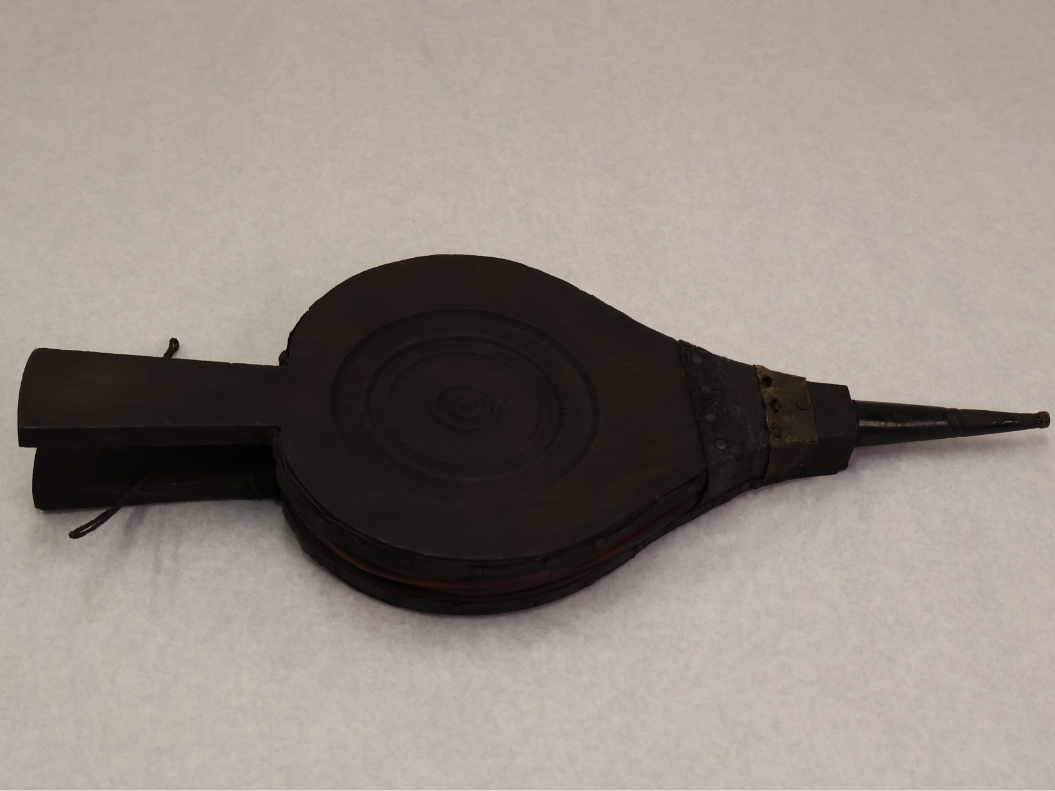
Hint: helps make s'mores
Fireplace bellows! Bellows are used to blow air to light a fire. By opening and closing the wooden handles, air blows out of the pointed metal tip. Before homes had furnaces and centralized heat, bellows were an important tool to light fires in fireplaces.
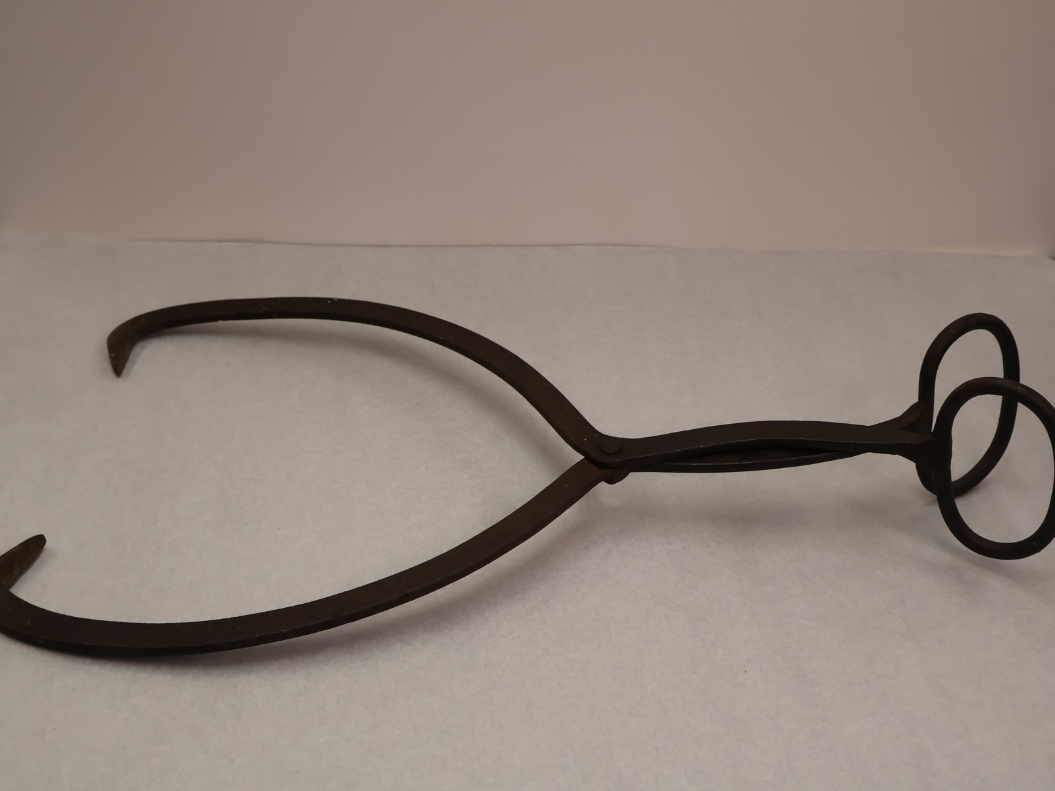
Hint: not used in kitchens
Ice tongs! These large metal tongs were used to carry ice. This would be useful if you had blocks of ice that you need to place in an icebox, or the precursor of a refrigerator that was cooled by ice.
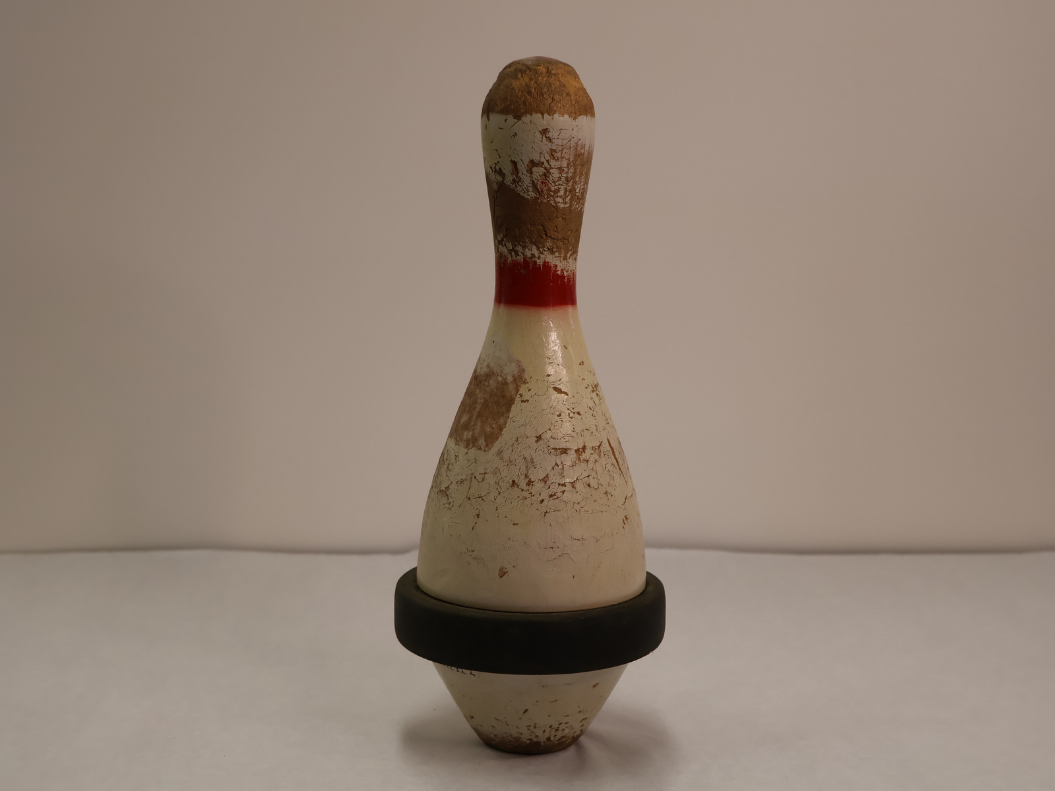
Hint: falls over easily
Bowling pin! This painted wooden object is a bowling pin. The band around the base is rubber, and the pin is shaped this way so that wobbles and topples over when hit with a bowling ball or another pin. This pin came from a bowling alley in Bowmanville that was located near the corner of King Street East and Division Street.
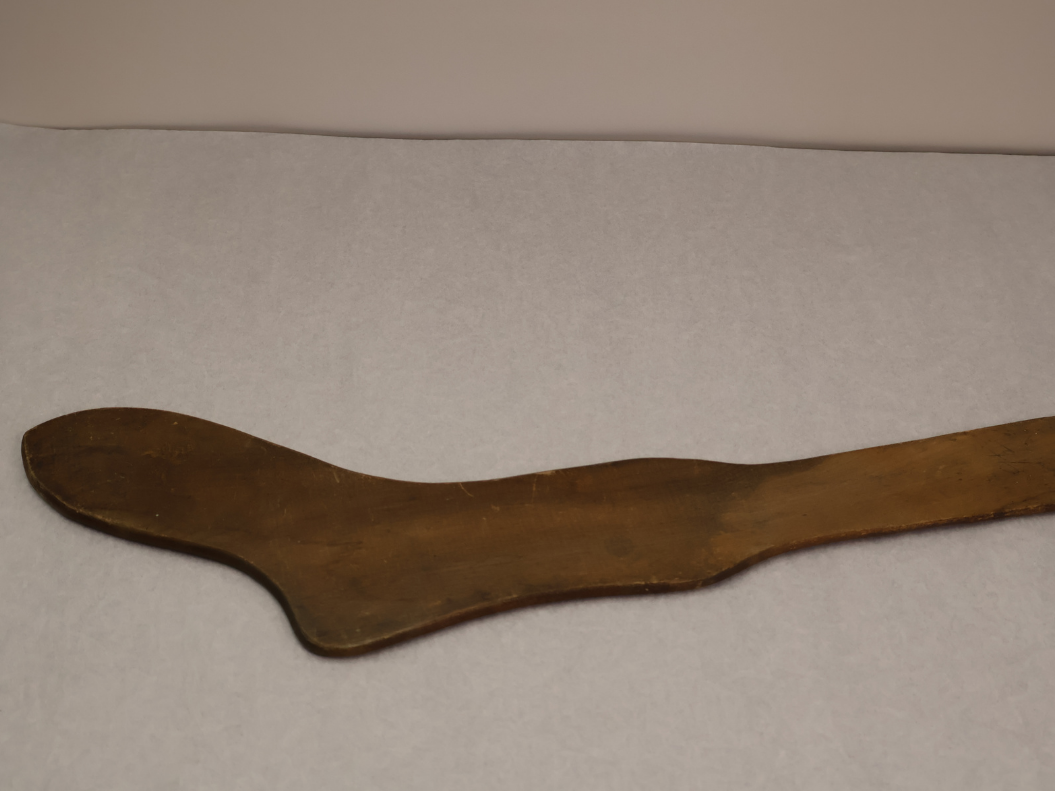
Hint:
Sock stretcher! In the past, many socks were fashioned out of wool, which came from animals like sheep and was spun into yarn and knitted into socks. Because wool tends to shrink when it gets wet, this wooden sock stretcher would have helped the sock retain its size as it air-dried.
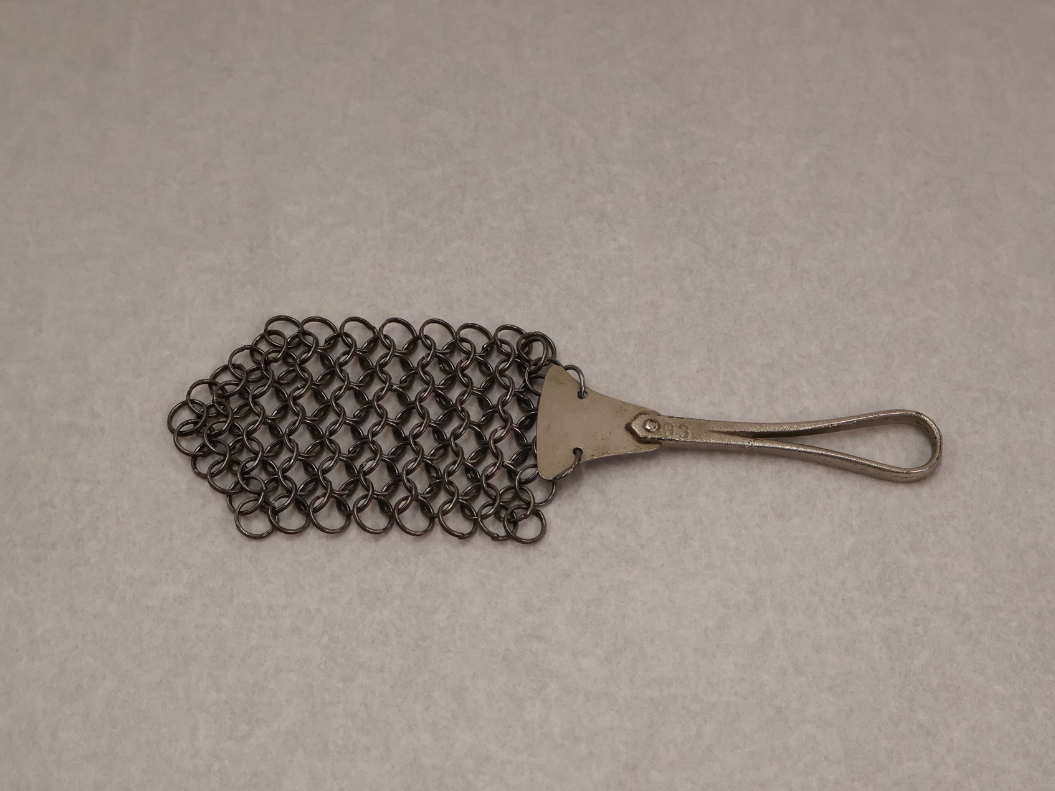
Hint:
Pot scrubber! While this metal object might look like something a knight would wear in Medieval times, it is actually a scrubber to clean pots. Over 100 years ago, pots and pans were often made out of cast iron and this device would help to scrape off baked on food.
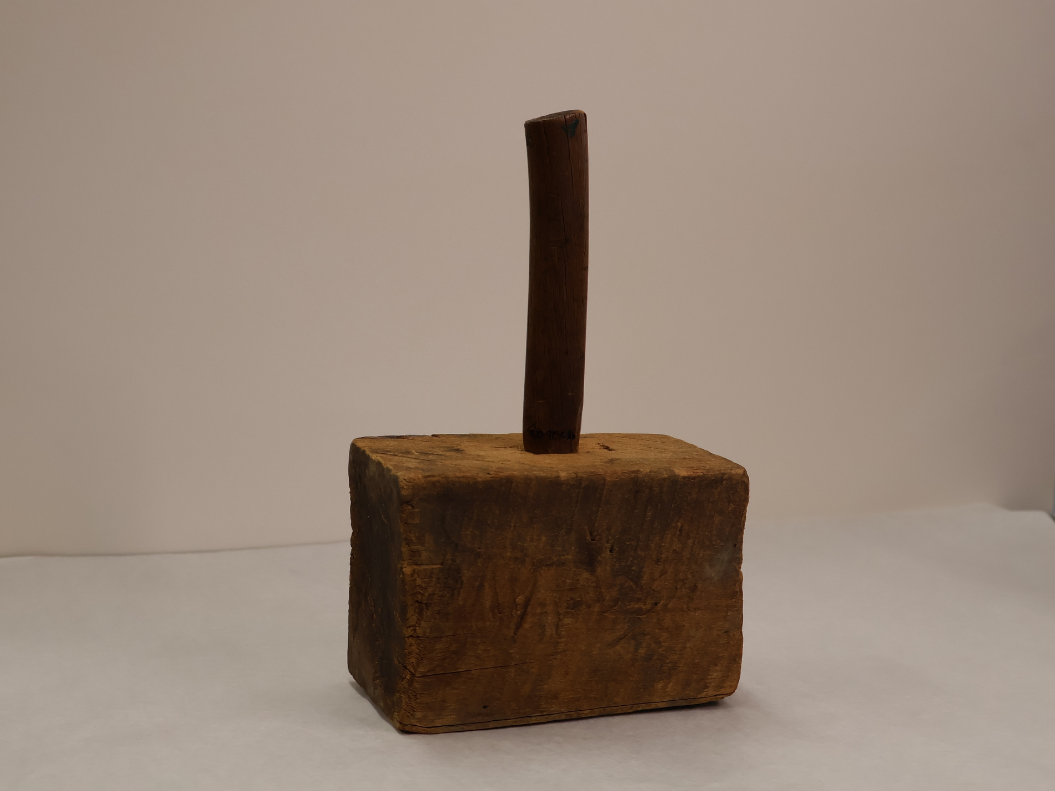
Hint:
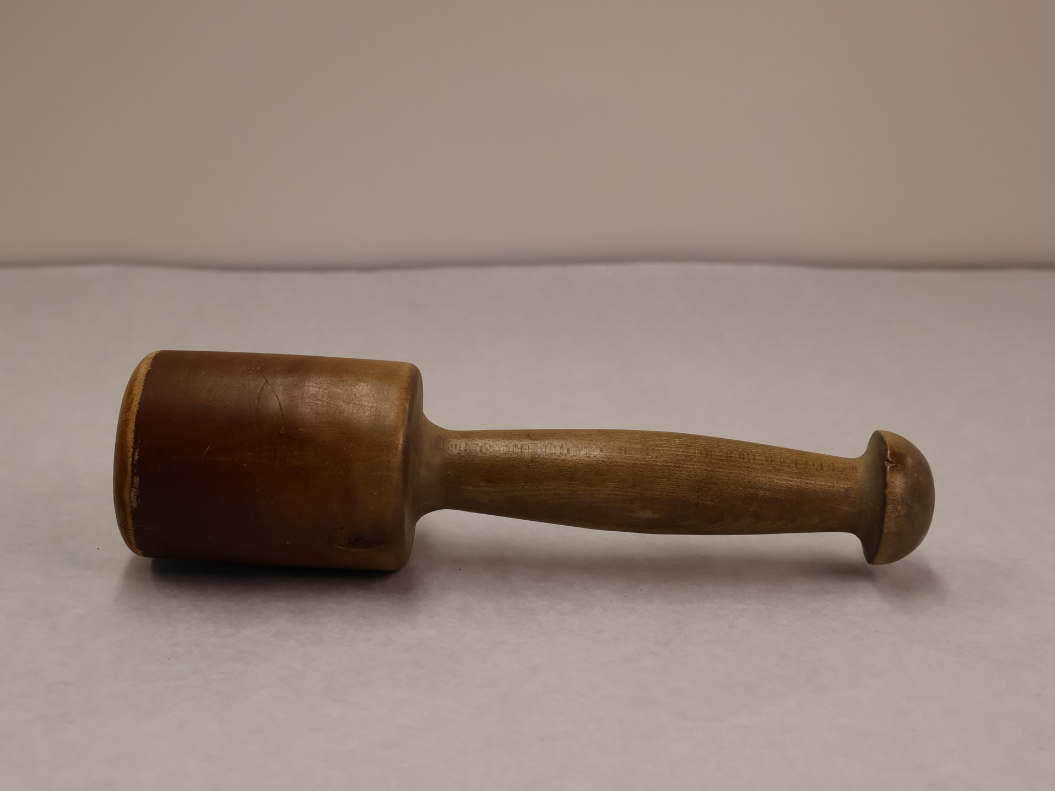
Mallet! Fashioned out of wood, this mallet is an example of a homemade tool. Mallets, like hammers, would be used to strike a surface to drive a tool or nail into another material.
Hint:
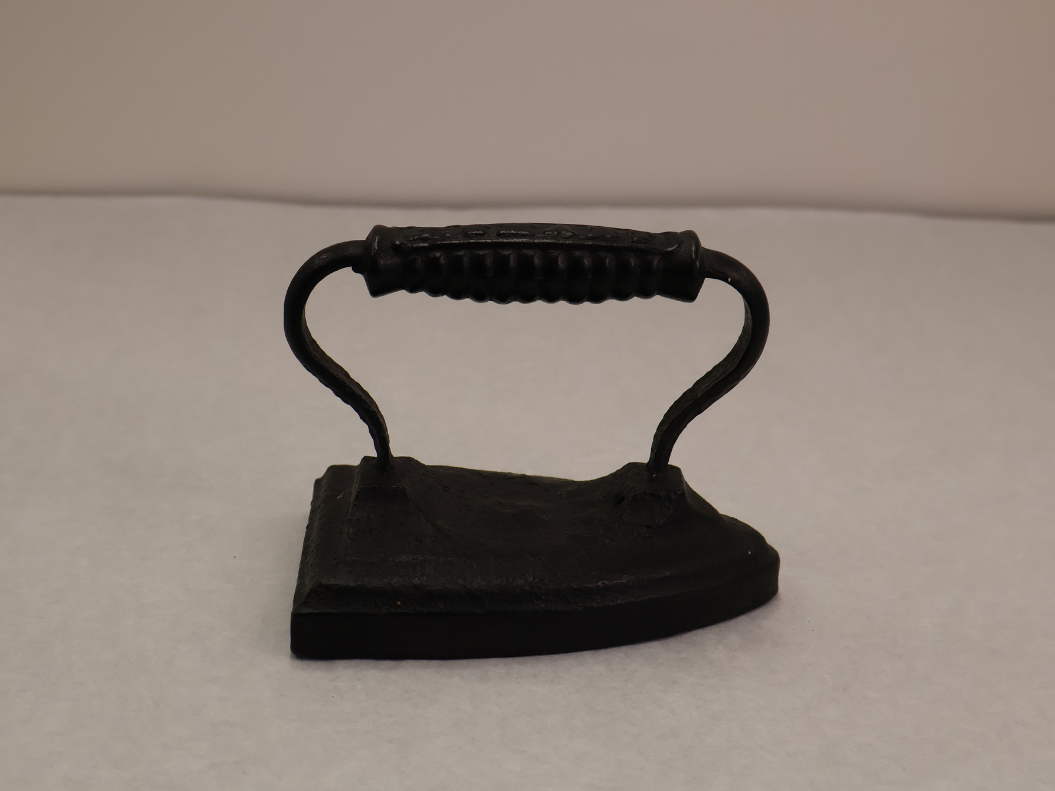
Clothes iron! Did you know, nearly 100 years ago, ironing clothes involved starting a fire and heating a cast-iron like this one on a stove? Irons today plug in and use electricity, but the concept is the same that clothing is lightly moistened with water and the smooth surface of the iron is passed over to eliminate wrinkles. On the handle of this object is "J. Smart," as it was manufactured by the James Smart company in Ontario in the 1850s.
Hint:
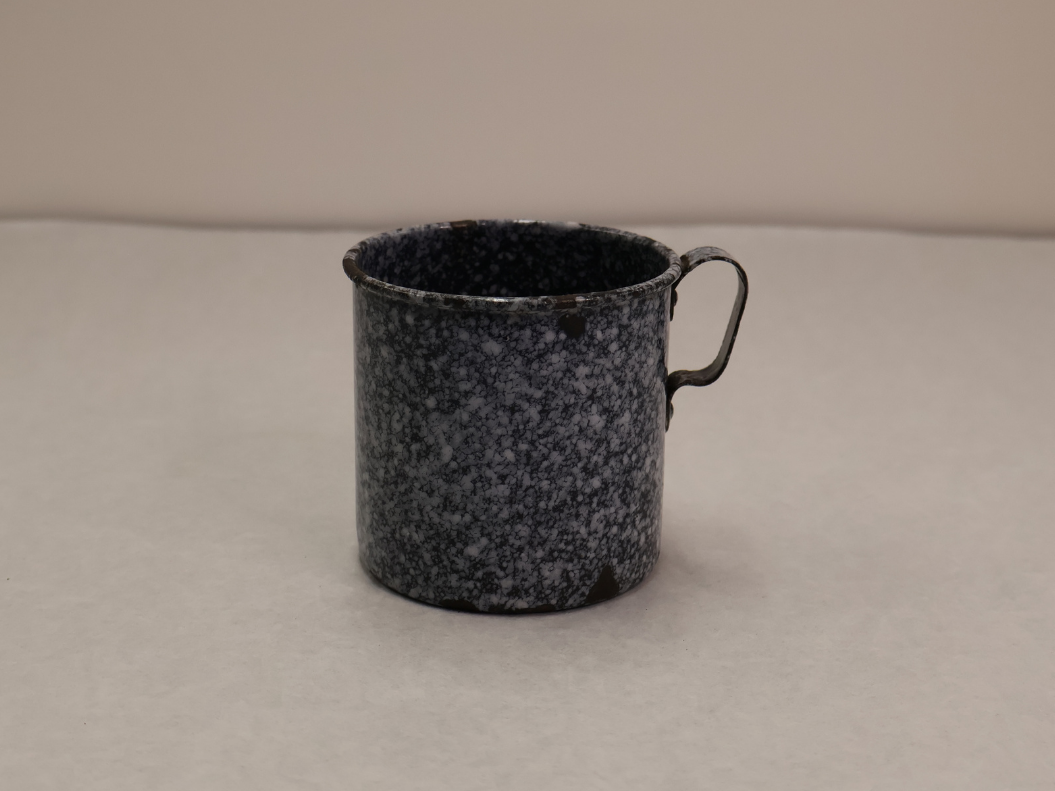
Cup! This cup is made of metal and is enameled. This enamel finish would make it durable, meaning you could use it for many years. You could use this for hot or cold beverages.
Hint:
Pestle! A pestle is a type of food grinding device that is often used in a bowl-shaped mortar. Pestles and mortars were used before electric blenders, and could be useful for things like herbs, spices, and sauces like pesto. As it is made out of wood, this pestle was likely a homemade tool, rather than made in a factory.
Contact Us
Clarington Library,
Museums & Archives
163 Church Street
Bowmanville, ON,
L1C 1T7